top of page

Monthly Newsletter

Quiet Pages is a free, slow-paced collection of long form essays (30 mins+ reading time) diving into the hidden connections between literature, life, and the spaces in between.

Each issue offers thoughtful and personal reflections on books, art, and the natural world—exploring themes of solitude and belonging, and the quietly big moments that shape our human lives.

Curious? Sign up to get Quiet Pages delivered as a newsletter directly into your inbox on a (bi-)monthly basis. 

You are now subscribed.

Welcome to the Quiet Pages 🖤

#05 | A Great Reading Year 2026: Twelve Highly Readable Books to Choose Over Netflix

  • Writer: Anabel Hafstad
    Anabel Hafstad
  • Dec 30, 2025
  • 15 min read

My sister-in-law has a wonderful New Year’s resolution: She’d like for the next year to be “a great reading year.” Obviously, that got me interested. 


What did that mean specifically for her, I asked, to have a great reading year? 


It meant, she explained, to find a sort of ease. A kind of tranquility, in which rest and joyful reading became possible in her everyday life.


What is clear is that she wishes to — sometimes — choose books over Netflix, even on weeknights. 


Of course it is more tempting to pick the ascetic silence of paper over the comparatively noisy screen when the paper has something thrilling to say. But what was thrilling, exactly, to her? Was it non-fiction tomes on WWII? Was it celebrity autobiographies? Was it romantasy, all the way? 


But in this regard, my sister-in-law had only three criteria:

  1. She mostly preferred fiction,

  2. she wanted the books to be comparatively “easy reads” (so no Virginia Woolf),

  3. and they needed to be special enough to nudge her off her "usual reading path".


Say no more, I shouted. 


I shall make you a grand old list: 12 smooth fiction reads for a great reading year 2026. 


So are 12 smooth and engrossing reads for your next reading year.


They are picked for their high readability — and for their lure of daring you to step into a completely different world outside your own.


That leaves me with only one thing left to say: Happy New Reading Year to you all. 📚🫖🔥🧦🛋️


Love,


January

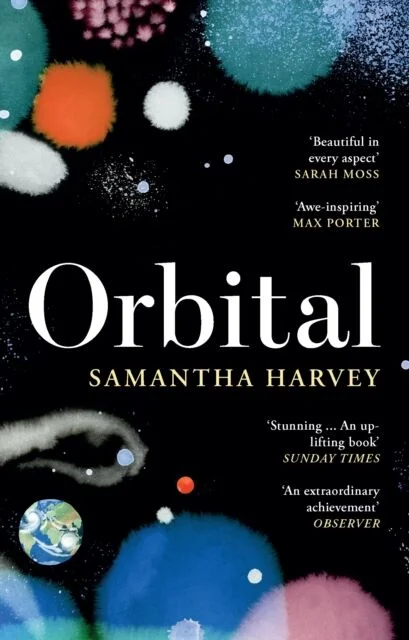
Orbital — Samantha Harvey (2023)


ree

I recently began reading a review on Orbital that started out by saying this title was for hypocrites. I didn’t read on because I was not interested. 


There is a reason why Orbital won the Booker Price in 2024.


It’s set in outer space, and it is gorgeous. An international crew of six astronauts and two cosmonauts circling our planet in the time span of 24 hours. 


That’s it. 


But then it’s so much more. It’s very slim and compressed, the prose deceptively simple yet deeply poetic.


If there’s one thing I love, it’s when an author is able to say so much with so few words (not a talent of mine, unfortunately). 

So I hope this will not deter you too much if I say that this book reads like one ecstatic poem about the beauty and brutality of Earth, humankind, and our place in the vastness of space. 


There is much to be harvested from this text, and it probably deserves at least two reads. 


Why does this go first on the list? It’s an easy, short read. It’s an extremely accessible masterpiece.


And with its gorgeous descriptions of our planet and outer space, it will definitely take you out of your regular reading orbit.


February

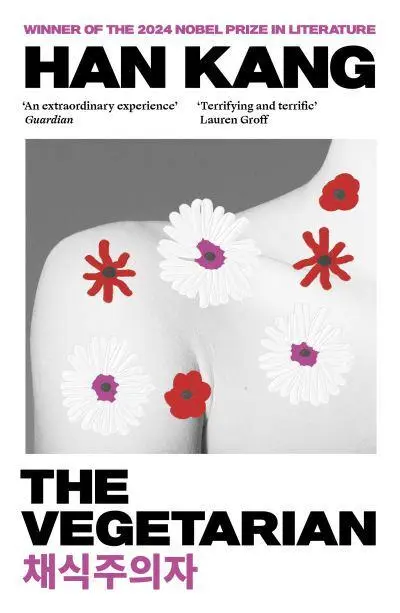
The Vegetarian — Han Kang (2007)


Cover of Dept. of Speculation

A friend once texted me, midway through reading this book, to say that it was “so funny.” I remember looking at my phone and feeling baffled. Funny wasn’t exactly how I would describe The Vegetarian


A few days later, she corrected herself.


Not hilarious.

Deeply disturbing.


The story begins quietly. Yeong-hye stops eating meat after a dream about animal slaughter. There is no argument, no explanation. She simply refuses. And to the world around her, it is this refusal —emotionless, contained, almost passive — that turns out to be intolerable.


What follows is not so much a slow descent into madness, as an act of external suffocation. 


Her husband, her family, the medical system — all respond as though something they have a right to control has been withdrawn from them. 

Yeong-hye’s body is the novel’s centerpiece, and through it womanhood is constantly examined. 


What does woman body offer? What does it allow others to take? What does it itself consume? 

Tellingly, the story is narrated from the perspectives of three different narrators — but never Yeong-hye’s. 


Her body is the novel’s — and the characters’ — obsession, but she herself never gets to tell her side of the story. 


Warning: There is violence in this novel, but it is rarely loud. It is debilitatingly psychological. It is carried out by people who believe themselves reasonable, and entitled. It accumulates, then settles all around Yeong-hye. Until it threatens to wipe out her entire existence. 


Like Awad's Bunny (see here), The Vegetarian doesn’t explain itself, and it certainly doesn’t soften its edges. 


But it’s won a shitton of prizes, it is extremely readable, and it most definitely will force you to step out of your regular reading rut, and into the body that doesn’t belong to itself.  


March

The Sound of A Wild Snail Eating — Elisabeth Bailey (2010)


Cover of Winning Words

This technically speaking isn’t fiction. But it is extremely readable.


Is it actually about snails? 


It is indeed. 


Specifically, it is about one snail in particular, because the bed-ridden protagonist and author is handed a common snail as a pet during a long and debilitating phase of severe illness. 


Much like yourself, probably, Bailey had zero previous interest in snails.

In her state of complete physical dependence on others she in fact felt at first that the snail was too much of a responsibility. 


She didn’t even know what snails liked to eat. Was it flower petals? Leaves? (They love mushrooms, it turns out).


After a period of initial hesitation, however, the author begins to feel more at ease in the snail’s presence. The snail, likewise, begins to slime about its days (or rather: nights, as it is a nocturnal creature) with surprising gusto and vigor. 


This book is a blend between a fiction-like memoir and a surprisingly exciting treatise on snails. 


Yes, truly. It is exciting. I would have never thought so myself, either.

Every page is an absolute delight, and one thing’s quite certain: I bet you didn’t know that some snails create — and shoot — arrows. At each other. Whilst making love. 


There.


I assume this got you hooked.


April

FREE: Coming of Age at the End of History — Lea Ypi (2022)


Cover of Entangled Life

Free is another technically non-fiction — but very novel-like — title on this list. What we are dealing with here is a quietly charming coming of age memoir set in Albania, before and after the collapse of socialism in 1990.


I know.


This may not sound fun.


And yet this book will surprise you with its unexpectedly gentle humour.

It begins in Lea Ypi’s childhood, which is precisely what makes it possible to view even the bleakest of political landscapes through an at times amusing lens. 


In eleven-year-old Lea’s eyes, the fact of her country’s dictatorship is certainly present — but not yet graspable.


Slogans, fear, and party loyalty exist merely as facts, rather than as the imposed principles of a cruel regime.


For young Lea, life at this age consists largely of — in retrospect — comically absurd misunderstandings.

Today, Ypi is a professor of Political Theory at the London School of Economics and Political Science, but it is through the prism of her most innocent girlhood days that we are allowed to experience Albania as an isolated Stalinist outpost in Europe.


She was eleven when the borders opened in 1990. In August 1991, tens of thousands of Albanians fled to Italy aboard the catastrophically overcrowded Vlora — and if you have never seen the photographs of this, you should take a look now.


Later, as an adolescent, Ypi witnesses further collapse. History accelerates. Her life is forced to reshape itself — again and again.


It’s the kind of book that makes you remember that you could have been born into a different kind of life altogether.


You could have been one of those clinging to the railings of the Vlora.


What stayed with me most, however, was not the politics, or the atrocities. 


It was the people: Ypi’s fierce, well-travelled grandmother; her pragmatic mother; her deeply kind, principled father.


And, of course, Ypi herself — sharply intelligent, observant, and stubborn in the best sense. A brilliant mind forming under pressure, then pouring it all on paper so we may see her world.


Ultimately, Free is a book about freedom promised — and about what humans do when that same promise is withdrawn.

It is also about how, under the right (or wrong) circumstances, an empty Coke can displayed on a television set can transcend its status as worthless trash… and assume the weight of both deepest betrayal and wildest hope.


May

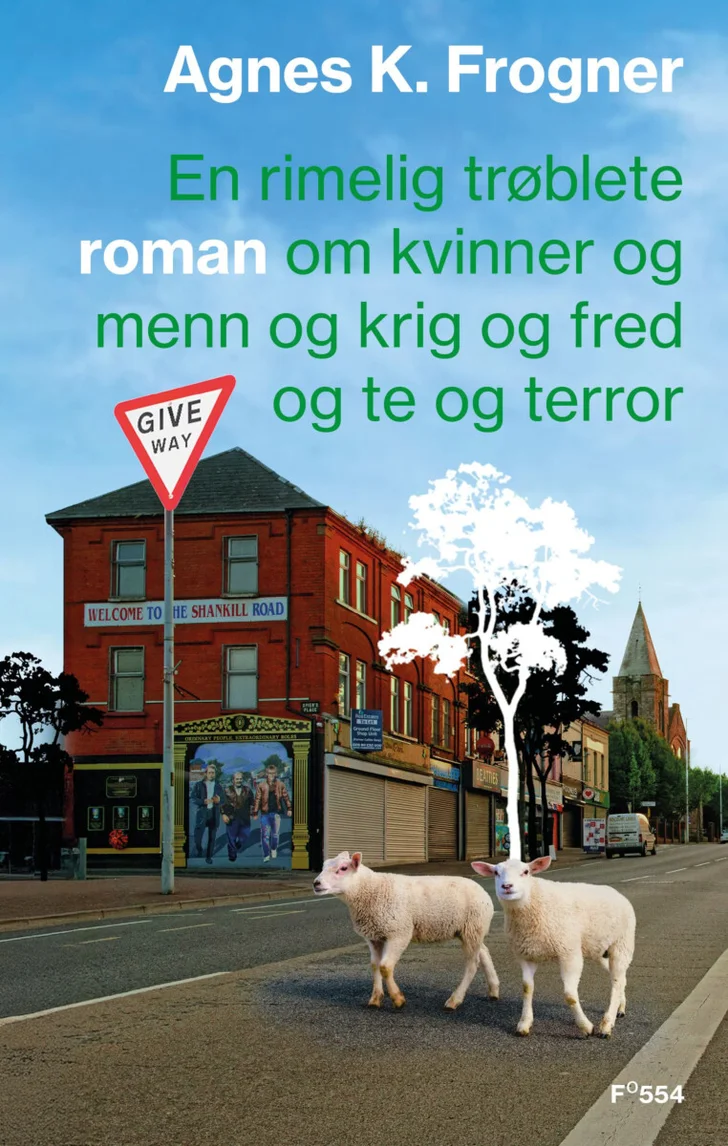
En rimelig trøblete roman om kvinner og menn og krig og fred og te og terror — Agnes Frogner (2025)


Cover of Good Wives

This one is currently only for the Norwegian readers.


Agnes Frogner was twenty years old when this book was published, and you feel it — not as immaturity, but as a kind of fearless lack of filtration.


The novel reads like an inner monologue spoken out loud. Without editing. Without knowing yet what should perhaps be left unsaid.


Which, conveniently, turns out to be exactly what gives the book its edge.


The narrator — Frogner — has no job and hasn’t finished upper secondary school, but she does have a plan. She travels to Northern Ireland to visit a former conflict zone, the stage of The Troubles, where she wants to talk to people on both sides. She wants to understand them better.


And also, she admits to wanting to “save the world” in the process.

What follows are awkward — sometimes genuinely uncomfortable — encounters: older men who invite her home, practical misunderstandings. Fronger handles all of it with a kind of pragmatic openness that is both disarming and funny.


And somehow, in between cups of tea and much logistical confusion, the author also manages to think about war, conflict, and politics with surprising depth and validity.


Is there naïveté here? Undoubtedly.


But it’s the good kind. The kind that asks questions before knowing which ones are considered intelligent, or appropriate, or socially acceptable.


Her position hasn’t hardened yet. She’s still in motion. It’s refreshing.


I inhaled this book in one go. Reading this made me feel faintly ancient — all that careful polishing the rest of us do, and along comes a twenty-year-old with a voice that is so unapologetically colloquial, unguarded, and alive.


En rimelig trøblete roman om kvinner og menn og krig og fred og te og terror takes us back to being almost painfully unfinished. To, in fact, only just starting out.


It reminded me of what the world felt like before we decided what we’re supposed to think about it.

After reading Frogner’s book, I figured this may in fact be a good thing.


June

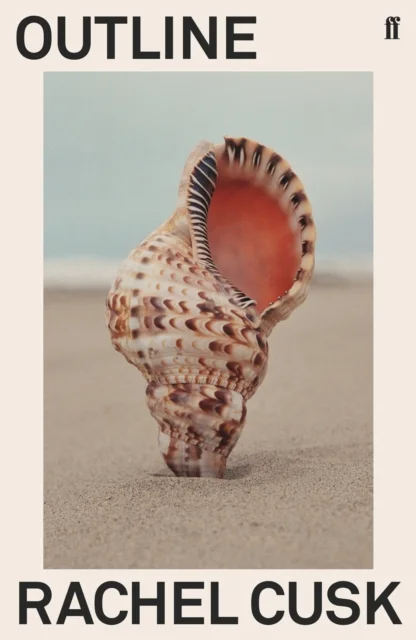
Outline — Rachel Cusk (2014)


Cover of Good Wives

Outline is set largely in Athens, where the narrator is teaching a summer course.


She is a writer.


She is recently divorced.


That is about all you will learn about her, however, because Outline does precisely what its title promises: it gives you only an outline — a silhouette.


How is this done?


People speak to her. Constantly.


Fellow passengers on a plane. Colleagues. Loose acquaintances, near-strangers. 

They talk about their marriages and separations, their children, their careers, disappointments, private compromises.


And she listens.


This happens naturally. The reader will be mostly content, and quite entertained, listening along with her. For a long while you may not actually realize that — because of all these other voices — the narrator herself remains, for most of the book, essentially invisible. Outside of our grasp. 


Until it begins to dawn on you.


Who is she? What is her deal, her story?


You begin piecing together information. It is a dazzling summer. We are in Greece. It is hot, the sea glitters, the boat dashes, the spray smells of salt. 


She is right here. She says very little. Still, a silhouette takes shape — but only just so.

This is a slow-paced but quickly-read portrait of a life that’s become definable only in contrast to the lives of others. Some of us may be able to relate.


Essentially, it is a demonstration of what it may mean to lose a sense of self. Of not knowing anymore who exactly you are, and beginning instead to understand yourself only in relation to what, or who, you are not.


You are not other people. 


That’s all you know about yourself.


Other people’s shape is what defines yours. It is their beginnings and endings that give you at least the contours of an outline.


By the end, the reader is left with the curious sensation that they have read an entire book and yet have only just begun to grasp who the narrator might, in fact, be. 


Which is convenient, because this happens to be a trilogy. If you’re left craving more (which I strongly suspect), you can simply move on to Transit.


Also, you may be wanting to book a flight to Greece.


July

Bunny — Mona Awad (2019)


Cover of The Mermaid of Black Conch

I began reading this on a plane, and instantly found myself gasping. I don’t often gasp aloud with books, but I did gasp aloud with Bunny


Because.


Drinks were spiked with drugs.


Bunnies were turned into pretty but soulless men, then they exploded gruesomely.


Blood splattered everywhere.


The self-important language of academia was hilariously parodized, and the narrator both absolutely loathes her writing group at university — and yet ironically belongs to it. 


I can only describe this title as a hallucinogenic blend between magic realism (leaning towards horror — I mean, there really is quite a lot of blood) and academic satire. 


In the end, I am still conflicted about whether I hate or love this book. 

I’m thinking now that I probably hate it, but at the same time was fanatically entertained while reading it — which I obviously loved.


I mean, I sat alone at a bar in Antwerp and blasted through page after page after page, being thoroughly horrified and also, unfortunately, rather delighted. 


The reason why Bunny is on this list is because it does precisely this: it achieves the impossible. It is somehow extremely readable, it is extremely strange — somehow lovable, but also somehow hateable. How?  

Nor am I entirely sure what it is trying to say — about academia, about gender, about literature, about life — and whether Awad has actually achieved her goal. 


But I do know she has managed to catapult me out of my comfort zone, and I am of the firm conviction that one does not have to like what a book says in order to love reading it. 


So. 


Consider this title an experiment. If you do give it a go, let me know what you think its core message might be.


August

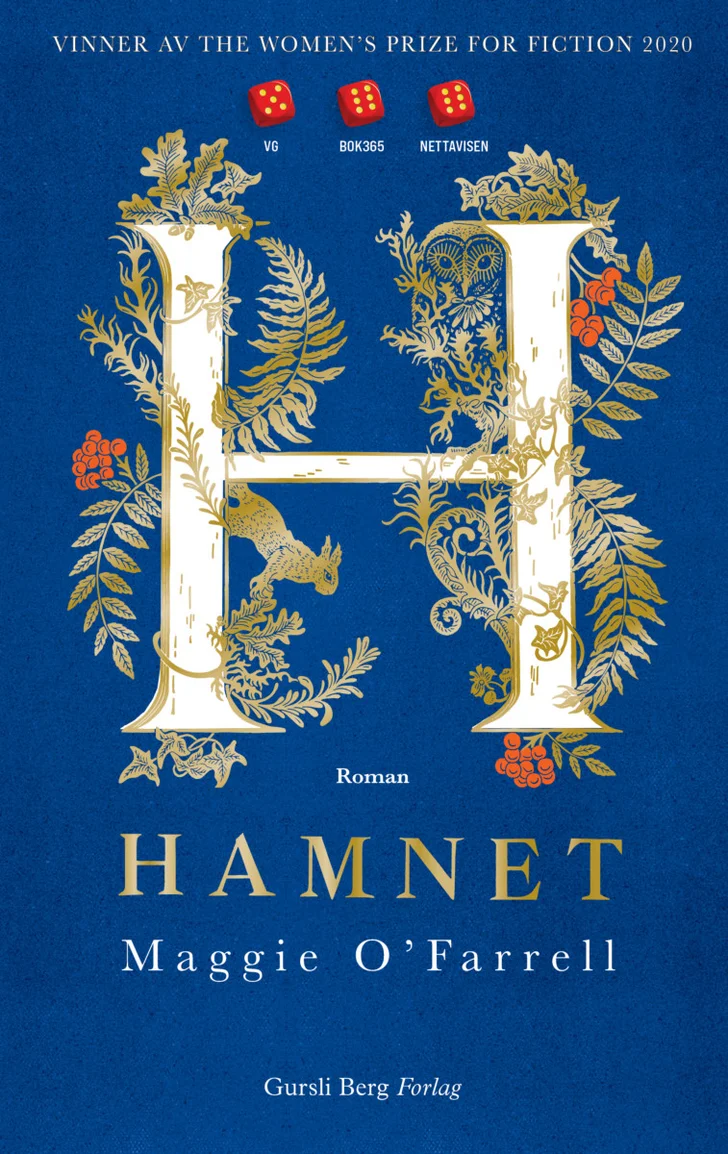
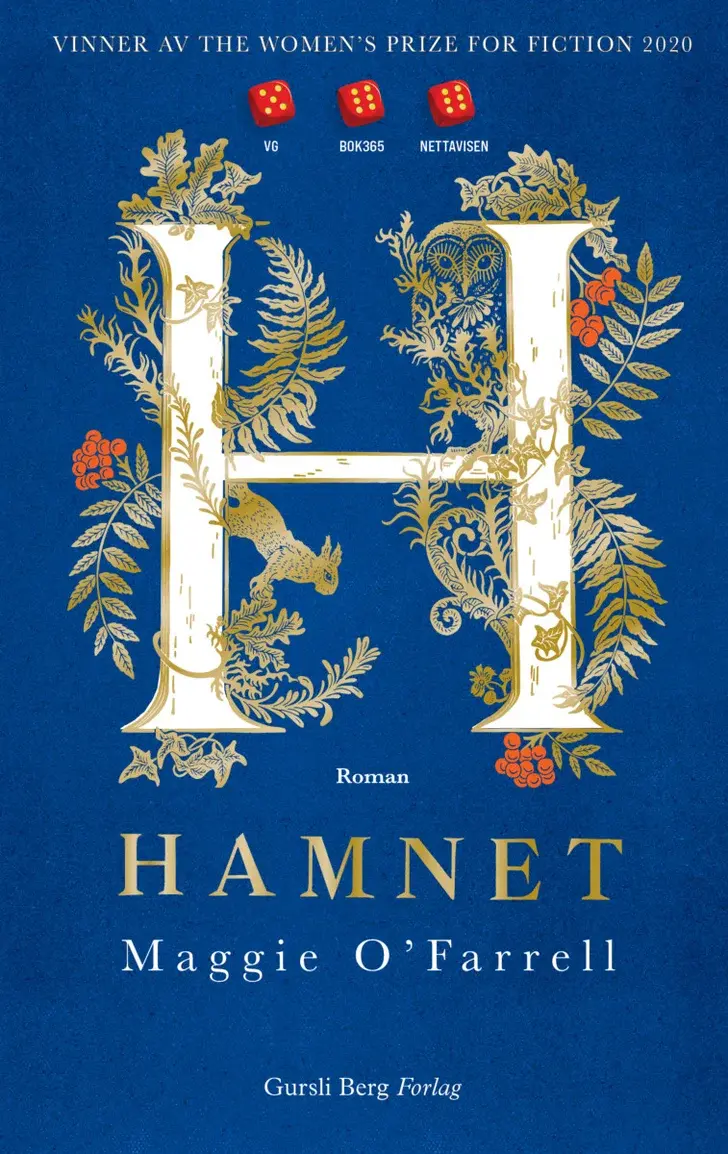
Hamnet — Maggie O’Farrell (2020)


Cover of Awayland

This jewel of historical fiction will extract you from the realities of 2026 and draw you deep into the world of the 1600s.


It does so by making everything come richly alive; the creak of ancient wood, the perfume of herbs and honey, the warmth of human skin on skin — of William Shakespeare’s and Agnes Hathaway's, his wife. 


This book is, however, quintessentially not about Shakespeare. In fact, it is the exact opposite. 


In a single paragraph, I have done what Maggie O’Farrel didn’t do once, because — throughout the entire book — she does not mention Shakespeare by his name. 

Not even a single time.


In Hamnet, Shakespeare is simply referred to as Agnes’ husband. 


This is her story, and the story of her children — one of which must die cruelly of the plague. Which I personally wasn't aware of, but it turns out that one of Shakespeare's — I mean Agnes' — children, named Hamnet, did die of the Plague.


(And yes. That is why Shakespeare wrote the infamous play, Hamlet. The two names Hamlet and Hamnet were used interchangeably at the time.)


This book is visceral. You are transported. You'll find yourself right there, four-hundred years back in time.

In the villages, the gardens, the pantries of the 1600s.


It's gorgeous.


And not to sound emotionally indifferent, but I rarely cry when I read books. But the two books that have made me cry in 2025 were Anne Frank’s Diary and O’Farrell’s Hamnet


I’ll leave it up to you to decide whether that’s something you want to do to yourself. 


September

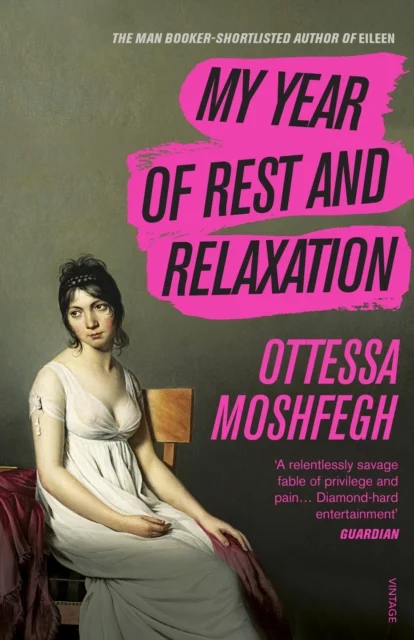
My Year of Rest and Relaxation — Ottessa Moshfegh (2018)


Cover of Poetry as Survival

Let me start off by warning you that the narrator of this book is extremely unlikeable. In fact, you will quickly realize she’s a total dick. 


So is nearly everyone she interacts with. 


That however, does not make My Year of Rest and Relaxation an unpleasant reading experience. On the contrary. 


You will be thoroughly appalled — and hooked.

This is because, when done well, unlikable characters may produce a strange kind of reading pleasure.


It’s a story of enjoyment that does not rely on our identification, or even sympathy, with the narrator to actually keep us going. 


Moshfegh — a master of darkly twisted, strange humor — does this exceptionally well.

The novel is set in New York around the year 2000. Its unnamed narrator feels only dread and exhaustion.


That’s it. That’s all she feels: dread, and exhaustion, and complete indifference towards anything and everything.


Which is why she ends up making a problematic plan. She resolves to simply sleep through an entire year — with the help of an obliging psychiatrist and an escalating cocktail of drugs. 


What emerges is not so much a story about actual rest or relaxation, as about complete and radical self-erasure. 


It taps into a sort of deep yearning to opt out of human consciousness. 


To suspend all unwanted responsibility, or painful memory. 


What we learn about the narrator’s motives comes to us only indirectly. Beneath the grotesque humour — because there actually is humor in all this — lies a profound sense of grief. 


The narrator has lost, and is now lost herself.

Sleep becomes the only way to stop wanting what she cannot, or can no longer, have.


So yes, this book is about being a total jerk, and it’s also about New York, about self-medication, about wealth, and 9/11, and sleep.


But it is certainly not about relaxation. Nor will you be able to relax when reading, because — like Bunnythis is another ‘gasper.’


You will gasp at the narrator’s assholeness. And yet I can almost guarantee you that you will prefer the asshole over watching Netflix.


October

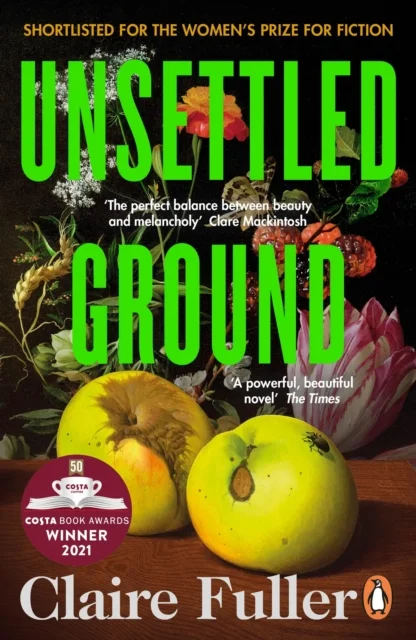
Unsettled Ground — Claire Fuller (2021)


Cover of Die Zeit der Verluste

This is a bleak and tightly controlled novel — Claire Fuller’s signature style. Cool in tone, unsentimental, and quietly merciless. 


Two adult siblings, Jeanie and Julius, live with their mother on a small piece of rural English land. They’re sealed off from the world; their life is narrow, repetitive, and they have little to no knowledge of the modern world, including modern comforts.


They grow food. 


They follow routines. 


They depend on their mother for everything — although they do not yet understand how complete that dependence is.


Their life together is not exactly idyllic, but it is stable. Or so it seems. Because when their mother dies, the siblings are forced into a reality they are entirely unequipped to navigate.


What follows is not drama, but pressure. The slow tightening of a vice.


Bills, money and debt, the simplest of social expectations, complex legal language systems. These are concepts, it turns out, designed for people who already know how to move through them. 


But Jeanie and Julius have never been taught how to live in the real world, and their helplessness takes them to the brink of destitution. 

Fuller’s prose is restrained to the point of chill. Nothing is overstated. You keep reading not because things explode, but because they don’t. No one intervenes. No one steps in to help. You simply watch the lives of these two humans unravel, page by page.


This is a story of what it means to be vulnerable without protection.


It reminds us of how easily certain lives may slip through the cracks of social safety — how destitution can unfold quietly amongst us, yet without witnesses, and without outrage. 


Without anyone even noticing that something has gone terribly wrong.


November

On the Calculation of Volume I — Solvej Balle (2020)


Cover of Die Zeit der Verluste

Admittedly, Balle could have chosen a snappier title. But the cover caught my attention, and when I read the blurb, I was instantly fascinated.


Tara Selter is stuck in time.


Like many fictional characters before her, she is forced to relive the same day over and over again, and the common response to this is: “Oh, like in Groundhog Day?”


Yes, kind of like in the movie Groundhog Day. Except that Solvej Balle — a Danish author choosing to set the novel in Belgium — takes the concept to the absolute extreme. 


She forces her protagonist to re-live November 18 again and again, for at least thirty years.

I say at least because, despite the relatively familiar concept, and thus high boredom potential, I have meanwhile arrived at the doorstep of volume six. That is how readable these books are: Tara is now thirty years older, and she still wakes up to the same day — yet there are two more books to go. 


What makes Balle’s version of the “stuck in time”-concept different is that the world around her loops — her husband wakes up unchanged every single day — but she does not.


She changes. 

She ages.

She can get injured, and she uses up resources. 


Unlike everyone else.


Whatever her husband eats is back on the shelves of the supermarket the next day— but if Tara eats it, it’s gone. 


Forever. 


The protagonist becomes — she feels — a parasite gradually devouring her own world. 

The only reason why I had to take a break from the saga is because I ironically read five of its books during an especially overcast and rainy November. Because the book is itself set in a forever-sort of November, I began having strange thoughts while looking out the window: 


Tomorrow, it’ll all just begin again, everything. 


It’ll all be exactly the same


In other words, my brain seemed to have been caught in Tara’s loop. It would take me a moment or two to correct the error. 


Time to take a break!


Balle used thirty-five years to complete this work, which was originally published in Danish. The English translation of the first volume was been shortlisted for the 2025 International Booker Prize.


And no. You do not need to read all seven books. 


If your goal is to read something quiet, suspenseful, and unusual, simply read volume one — and see where it takes you.


November

Dept. of Speculation — Jenny Offill (2014)


Cover of Die Zeit der Verluste

I have already written about Offill’s beautifully crafted portrait of a marriage in the Quiet Pages issue #03 Favorite Books of 2024: Gorgeous Protective Spells for a Changing Year. 


This is a quiet, lyrical read taking you to Brooklyn, New York.


Its subject matter is deceptively mundane: an author struggling to write her second book, the hardships and loneliness of early motherhood, a fading relationship, the discovery of bedbugs. 


And yet, from beneath the layers of trivial seeming fragments Offill presents as an increasingly beautiful mosaic, deep thoughts surface.


How does a marriage survive the slow accumulation of disappointment?

Not betrayal alone, but boredom, misalignment, resentment, fatigue. The book is less interested in rupture than in erosion.


Is staying a moral act — or simply inertia?


Why do we continue, despite everything?


Similar to Orbital, this enticingly slim novel is a poetic feast to read, because it is — fragment by fragment — able to reel in some of life’s biggest questions by focusing on the microscopic. The barely noticeable. 


The otherwise trivial. 


"There's that moment, you know, for most people, where you decide you want to wake up in the world one more day."

And there is also that moment, you know, when the book ends but you wish there were just one more page.


Just one more, beautiful, wonderful page.


But when there isn't, you might just have to consider re-reading it all over again, right from the start...


And maybe you will?


Hey gorgeous! ✨ Want more great reads?


Last December, I wrote about how books had been a sort of protective spell against the life's toughest challenges.


All of it swooped up in one deliciously long-format issue of the Quiet Pages.


Comments


Commenting on this post isn't available anymore. Contact the site owner for more info.

Recent Quiet Pages

pexels-martinpechy-922100.jpg

A Slow Newsletter

Liked what you read? Quiet Pages is a free, slow-paced collection of long form essays diving into the hidden connections between literature, life, and the spaces in between.


Each issue offers thoughtful and personal reflections on books, art, and the natural world—exploring themes of solitude and belonging, and the quietly big moments that shape our human lives.

Curious? Sign up to get Quiet Pages delivered as an occasional newsletter directly into your inbox. 

Welcome to the Quiet Pages

bottom of page